Low-Power Physical Design

Low-Power Physical Design & UPF Library

Learn low-power architecture, UPF implementation, verification, and multivoltage signoff through focused guides and interview practice.

Practice 80 free low-power interview questions

New: Low Power Basics Premier

Learn low power from first principles

Nine mentor-style chapters spanning power fundamentals, standard cells, memories, activity, architecture, implementation, UPF, and CPF.

Need tool implementation details? The practical 11-chapter UPF and implementation guide is also available. Get the complete guide for ₹99 ↓

₹299₹179Full 9-chapter bundle
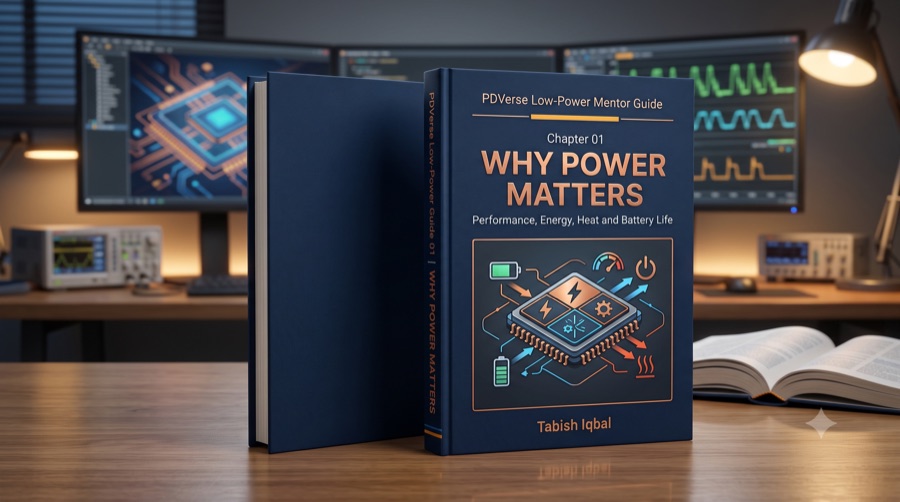
Low Power Basics Premier Chapter 01: Why Power Matters
Chapter 01, 24 pages₹29

Why Power Matters

Understand where chip power goes, why it limits modern designs, and how engineers reason about power from architecture to silicon.

  • Dynamic, leakage, and short-circuit power
  • Power, energy, and thermal limits
  • Battery life and performance trade-offs
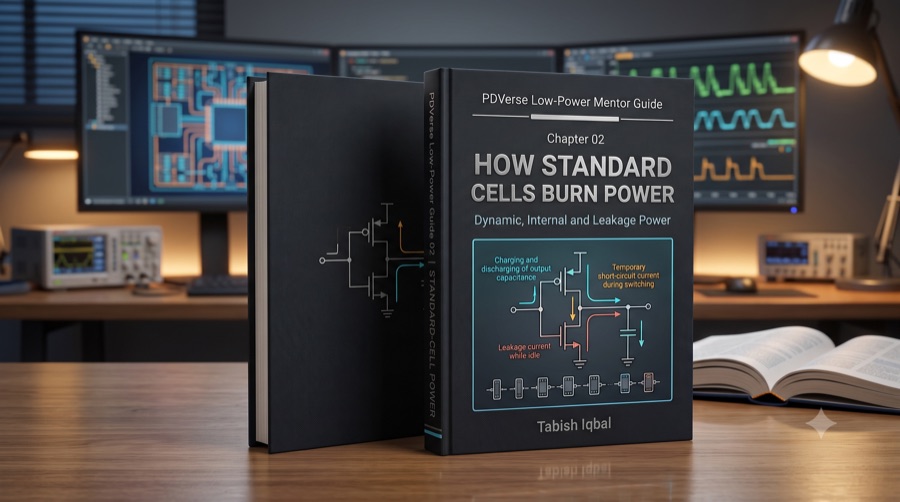
Low Power Basics Premier Chapter 02: How Standard Cells Burn Power
Chapter 02, 46 pages₹29

How Standard Cells Burn Power

Build transistor-to-cell intuition for switching, internal, leakage, and clock-network power.

  • CMOS switching behaviour
  • Cell internal and leakage power
  • Clock-tree power and sizing trade-offs
Low Power Basics Premier Chapter 03: Memories, Macros and I/Os
Chapter 03, 37 pages₹29

Memories, Macros and I/Os

Learn why SRAMs, hard macros, interfaces, and off-chip loads need their own power strategy.

  • Memory and macro power modes
  • I/O and interface power
  • Macro-level estimation and controls
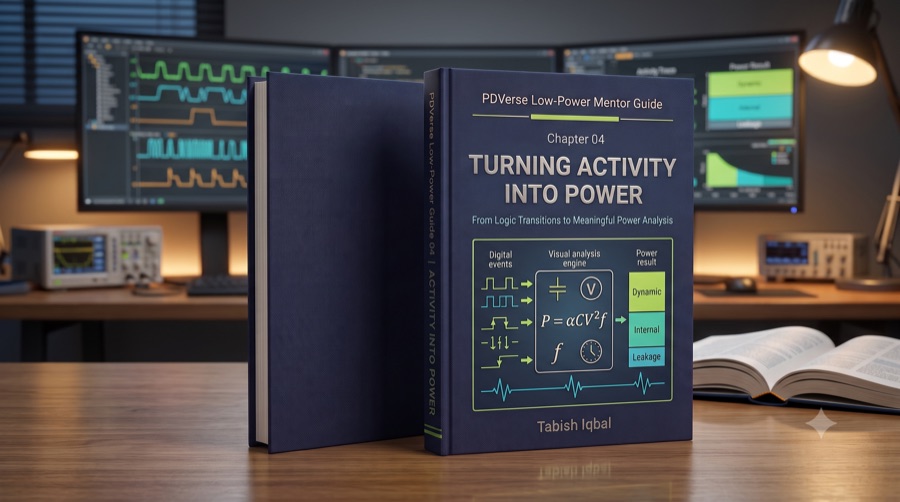
Low Power Basics Premier Chapter 04: Turning Activity Into Power
Chapter 04, 47 pages₹29

Turning Activity Into Power

Connect toggles, capacitance, voltage, and frequency to realistic power analysis inputs and reports.

  • Activity factors and toggle data
  • Vectorless and vector-based analysis
  • Reading and questioning power reports
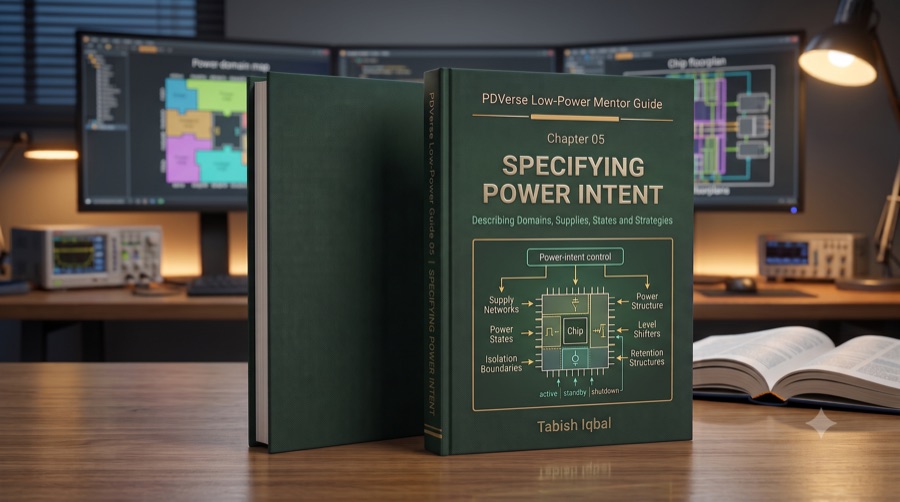
Low Power Basics Premier Chapter 05: Specifying Power Intent
Chapter 05, 50 pages₹29

Specifying Power Intent

Translate architectural power decisions into domains, supplies, states, and low-power strategies.

  • Power domains and supply relationships
  • Isolation, retention, and level shifting
  • Power-state intent and verification
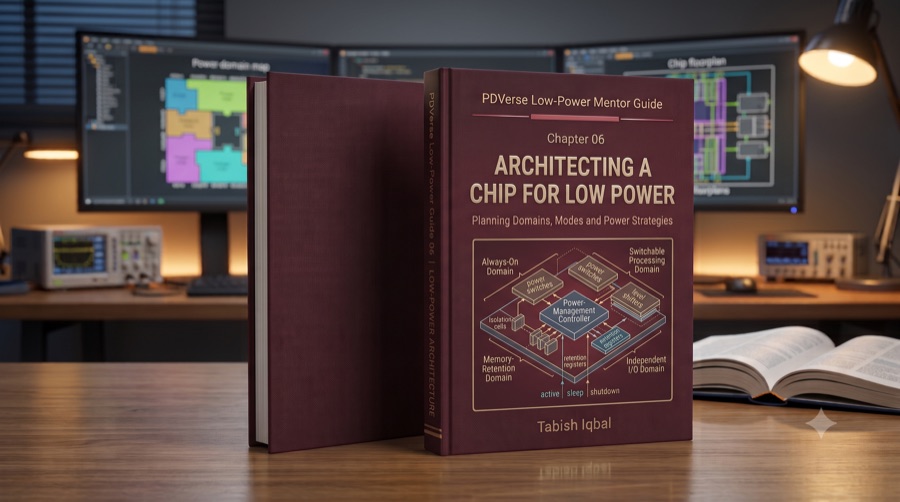
Low Power Basics Premier Chapter 06: Architecting a Chip for Low Power
Chapter 06, 47 pages₹29

Architecting a Chip for Low Power

Choose architectural techniques that reduce power before implementation choices become expensive.

  • Clock and power gating
  • DVFS and voltage partitioning
  • Always-on and retention planning
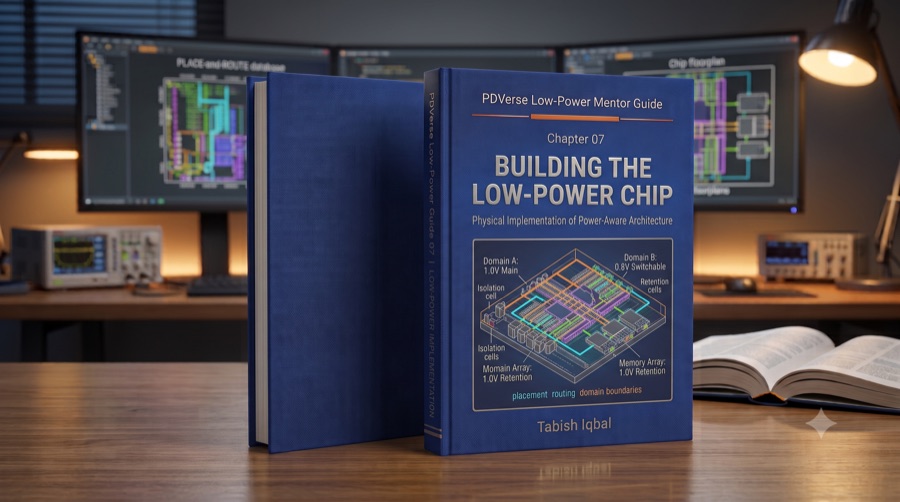
Low Power Basics Premier Chapter 07: Building the Low Power Chip at Implementation Time
Chapter 07, 49 pages₹29

Building the Low Power Chip at Implementation Time

Carry low-power intent through floorplanning, placement, CTS, routing, optimization, and signoff.

  • Voltage-area implementation
  • Special-cell placement and checks
  • Power-aware closure and signoff
Low Power Basics Premier Chapter 08: Describing Power Intent in UPF
Chapter 08, 52 pages₹29

Describing Power Intent in UPF

Learn how IEEE UPF represents supplies, domains, strategies, power switches, and legal operating states.

  • Core UPF objects and commands
  • Strategy definition and mapping
  • Power states and implementation checks
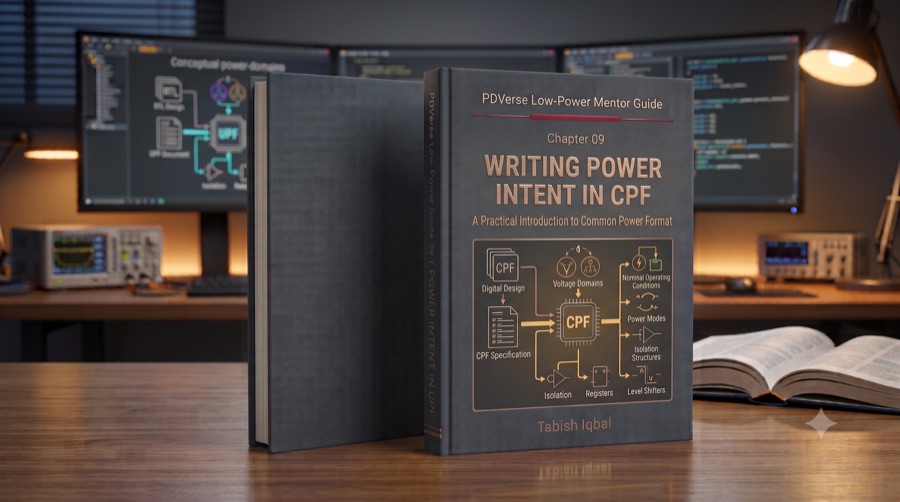
Low Power Basics Premier Chapter 09: Writing Power Intent in CPF
Chapter 09, 60 pages₹29

Writing Power Intent in CPF

Understand the CPF view of domains, modes, isolation, retention, and power-switching intent.

  • CPF objects and hierarchy
  • Power modes and low-power rules
  • CPF versus UPF mental models

Explore Low Power Tool Guide

Download all 11 chapters

Get the complete practical handbook covering low-power fundamentals, UPF authoring, implementation, verification, and signoff.

Low Power Basics PremierNow available

₹199₹99

Chapter Library

Low Power Tool Guide

Eleven focused chapters arranged in implementation order, included together in the ₹99 complete guide.

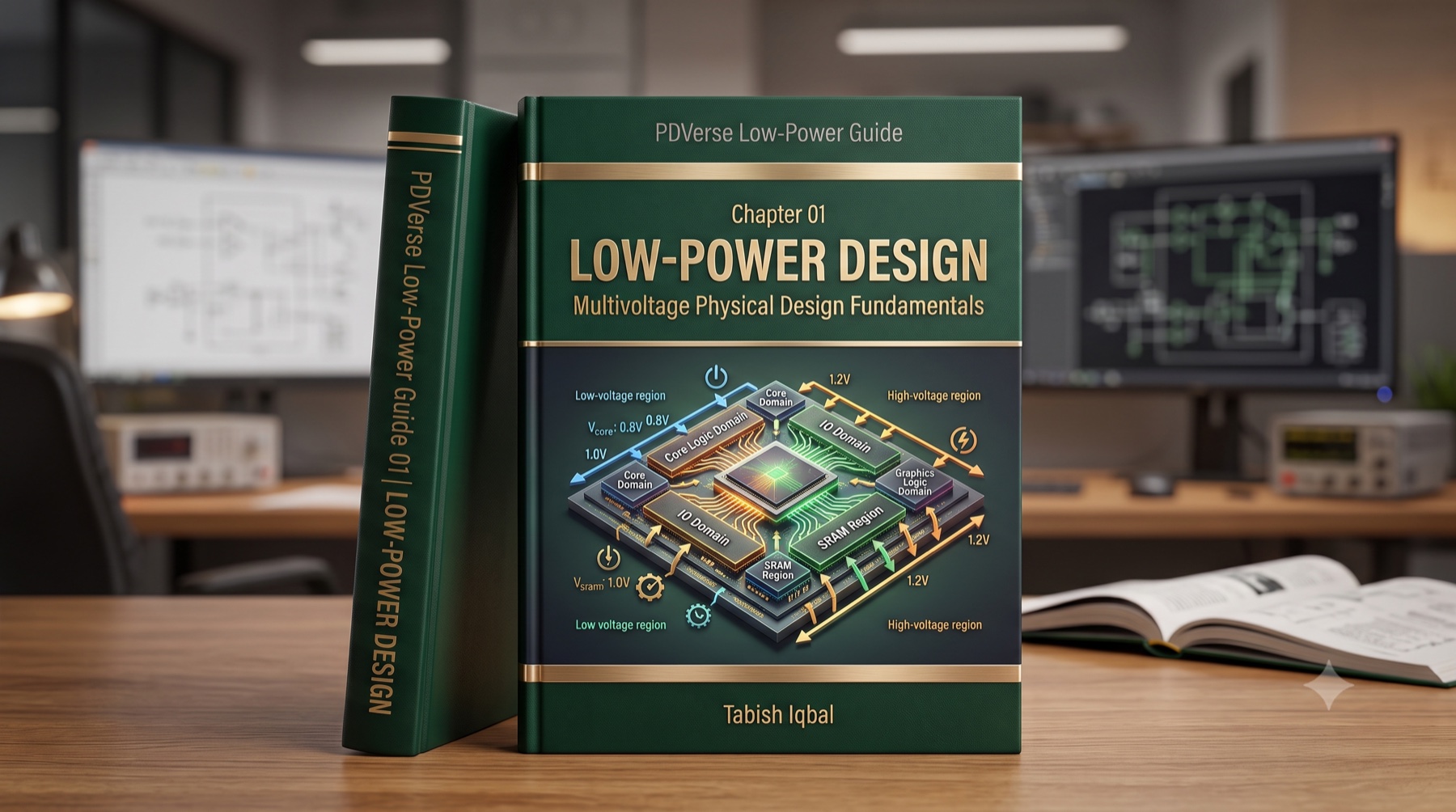
Chapter 01: Low Power and Multivoltage Fundamentals
Chapter 01, 12 pages

Low Power and Multivoltage Fundamentals

Build the foundation for low-power physical design and understand why modern chips need multiple voltage and power modes.

  • Dynamic power and leakage power
  • Voltage scaling and power gating
  • Multivoltage chip architecture
  • Low-power implementation flow
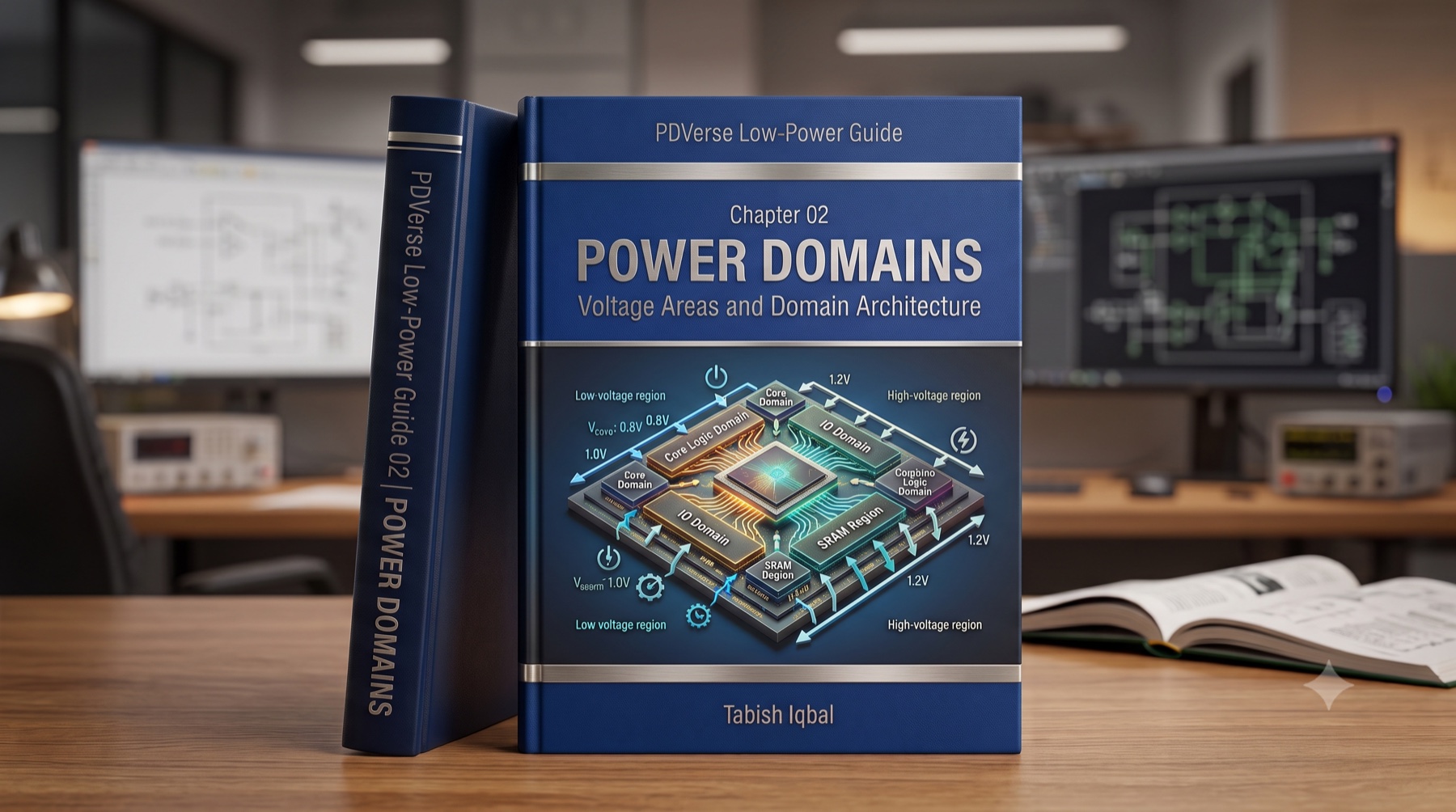
Chapter 02: Power Domains, Voltage Areas and Supply Architecture
Chapter 02, 11 pages

Power Domains, Voltage Areas and Supply Architecture

Learn how logical power partitions connect to physical voltage areas and the chip supply network.

  • Power domains and hierarchy
  • Voltage-area planning
  • Primary and always-on supplies
  • Logical-to-physical intent
Chapter 03: Power Intent and UPF Fundamentals
Chapter 03, 9 pages

Power Intent and UPF Fundamentals

Translate a low-power architecture into clear, tool-readable Unified Power Format intent.

  • UPF scope and hierarchy
  • Core UPF objects
  • Supply relationships
  • Loading and early checks
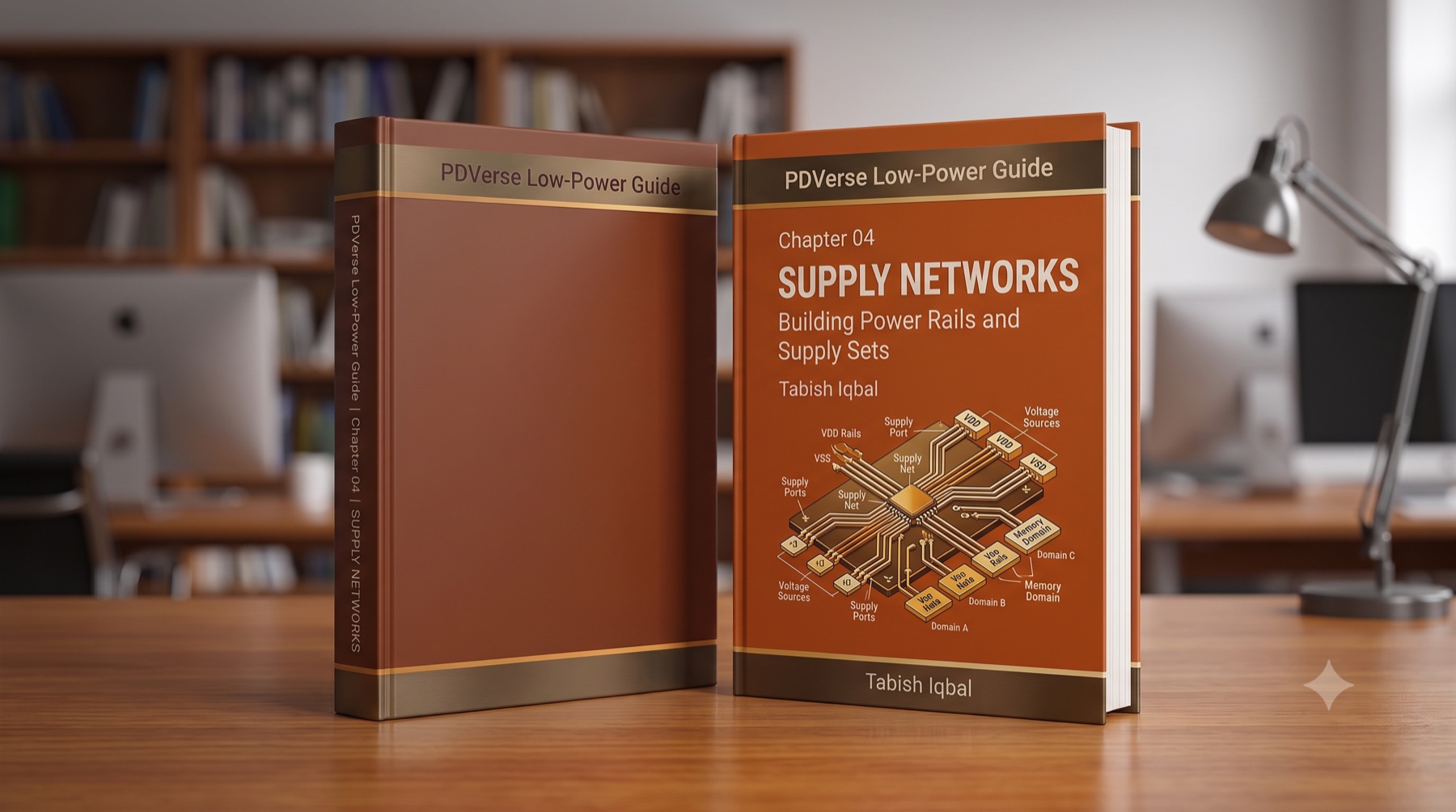
Chapter 04: Building the Supply Network in UPF
Chapter 04, 13 pages

Building the Supply Network in UPF

Construct a complete supply model that implementation and verification tools can understand.

  • Supply ports and nets
  • Supply sets and functions
  • Primary supply assignment
  • Port and power states
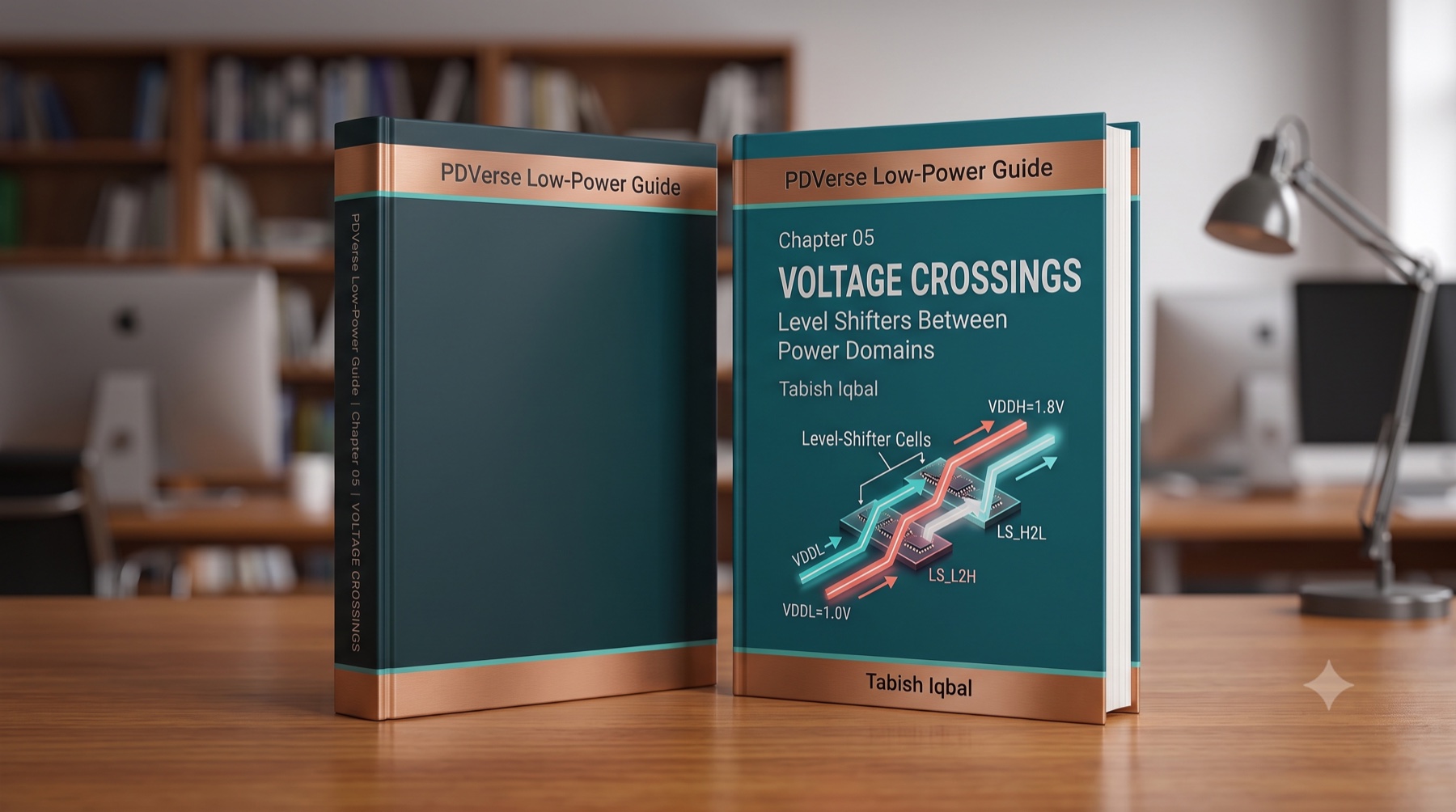
Chapter 05: Voltage Crossings, Level Shifters and Isolation
Chapter 05, 12 pages

Voltage Crossings, Level Shifters and Isolation

Protect signals that cross voltage boundaries or leave a domain that can shut down.

  • Low-to-high and high-to-low crossings
  • Level-shifter strategies
  • Isolation clamps and controls
  • Placement and library mapping
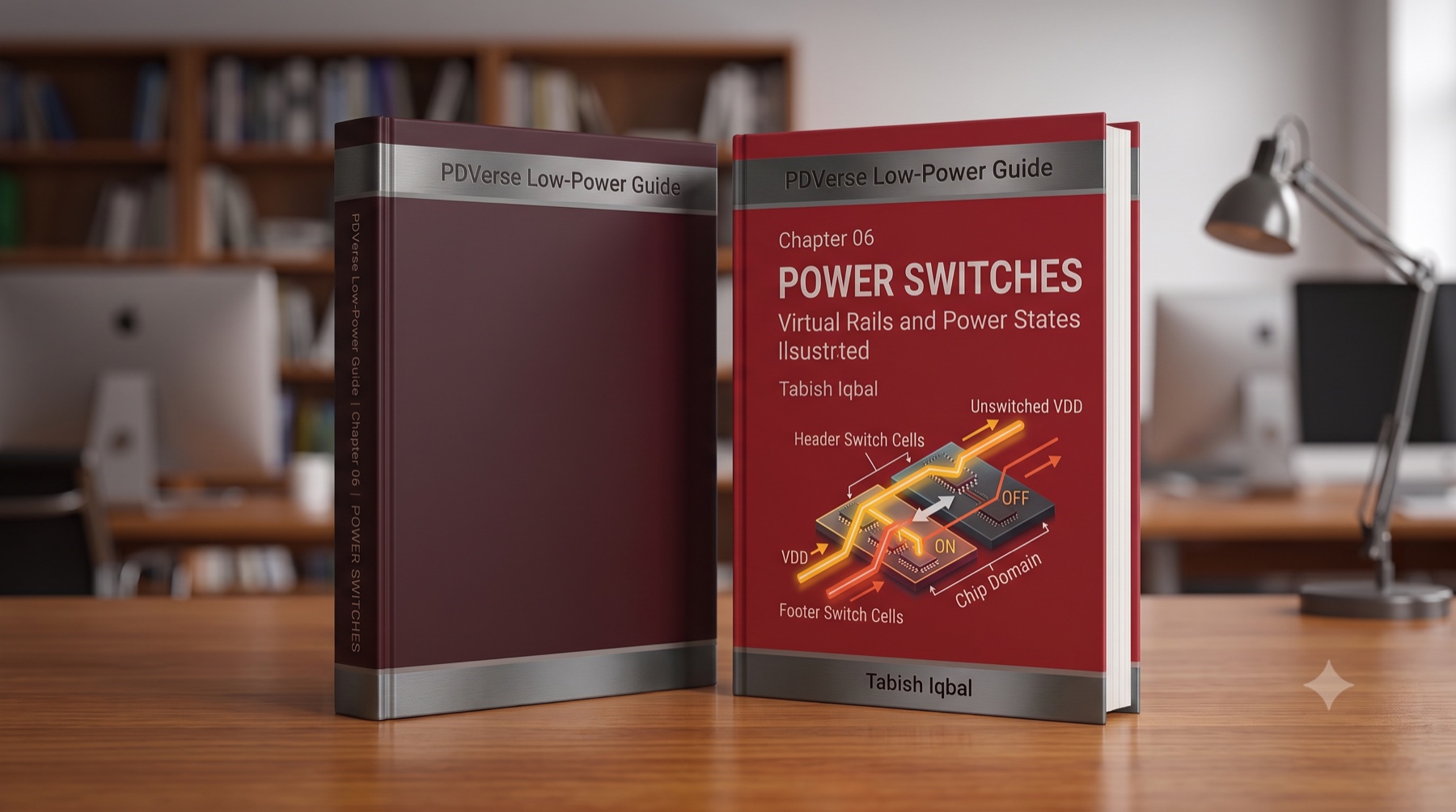
Chapter 06: Power Switches, Virtual Rails and Power States
Chapter 06, 12 pages

Power Switches, Virtual Rails and Power States

Model switchable supplies and define how a power-gated domain moves between legal operating states.

  • Header and footer switches
  • Virtual supply rails
  • Switch controls and sequencing
  • Legal domain power states
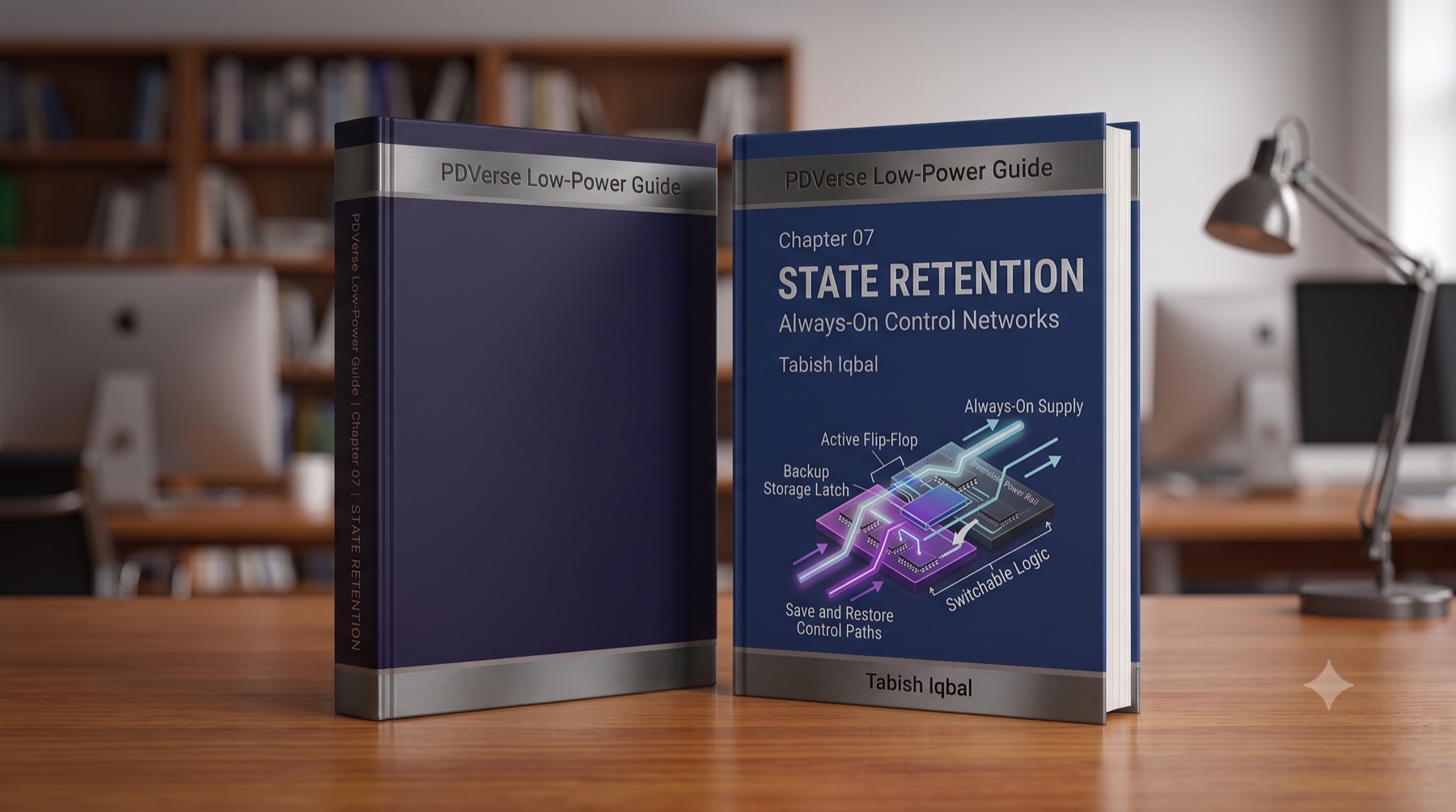
Chapter 07: State Retention and Always-On Control Networks
Chapter 07, 12 pages

State Retention and Always-On Control Networks

Preserve critical register state and keep essential control paths alive during shutdown.

  • Retention strategies
  • Save and restore sequencing
  • Retention supply planning
  • Always-on cells and buffers
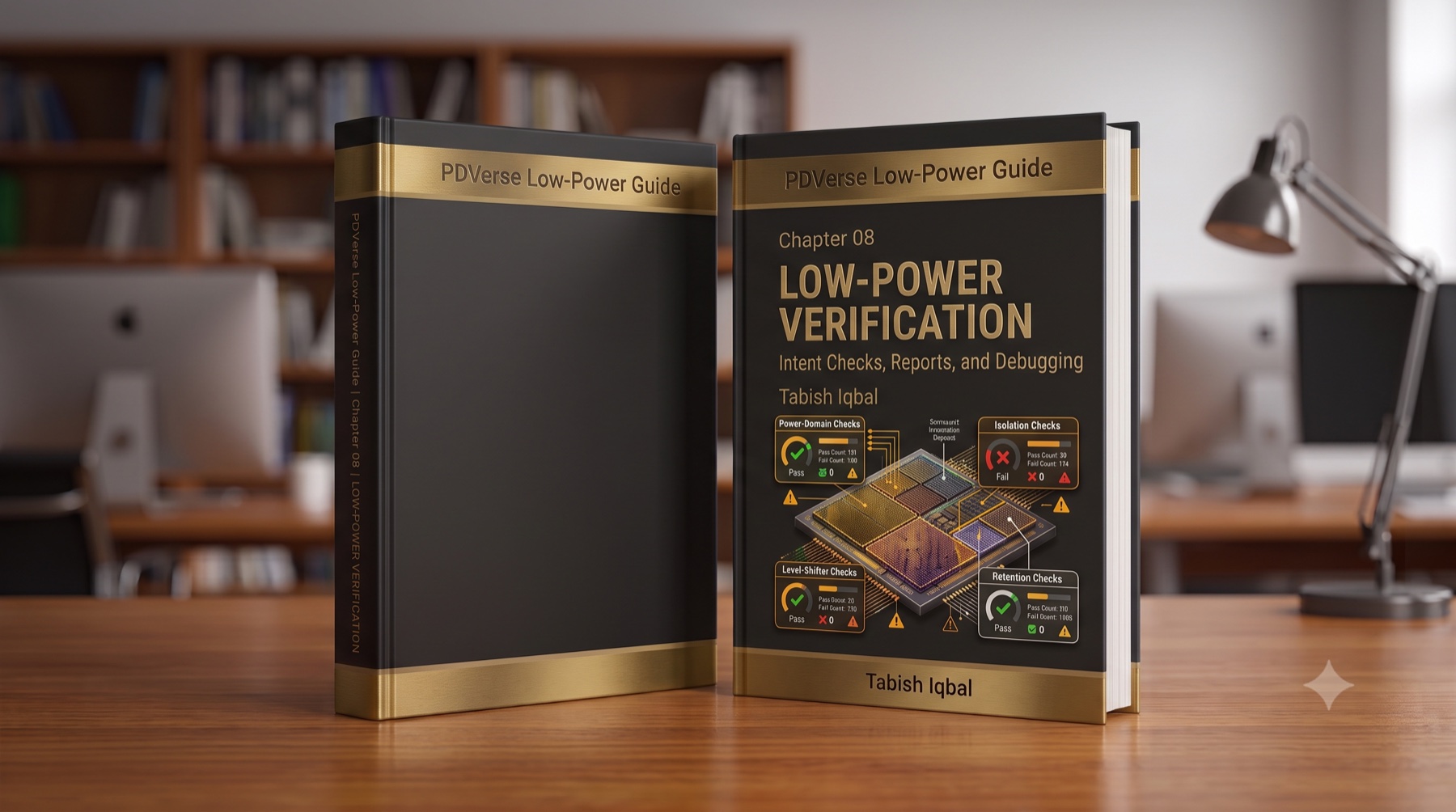
Chapter 08: Power Intent Verification and Debugging
Chapter 08, 10 pages

Power Intent Verification and Debugging

Find UPF problems early and debug the most common multivoltage implementation failures.

  • Structural UPF checks
  • Strategy and mapping failures
  • Supply connectivity debug
  • Multivoltage reports
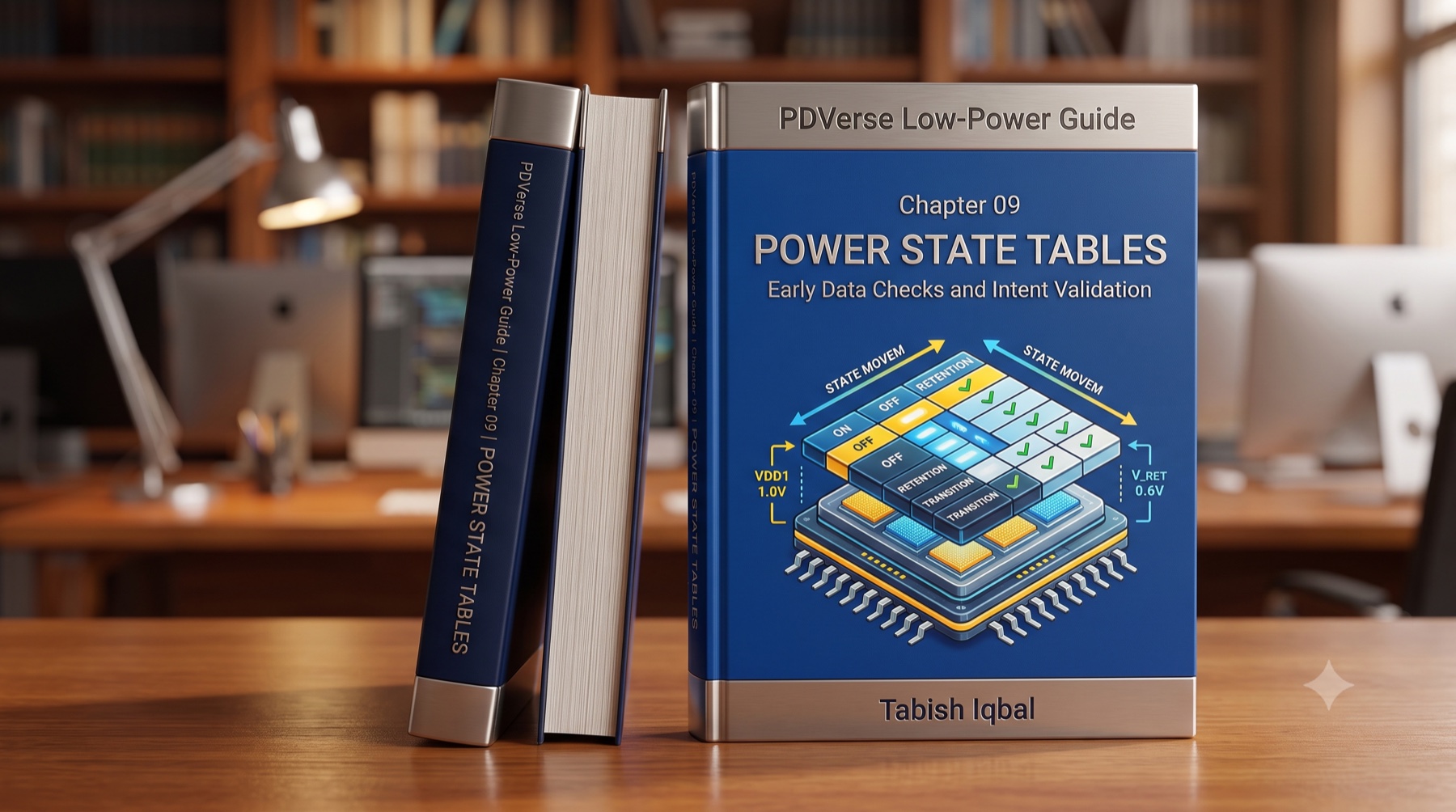
Chapter 09: Power State Tables, Early Data Checks and Signoff Readiness
Chapter 09, 10 pages

Power State Tables, Early Data Checks and Signoff Readiness

Describe legal system modes and build evidence that the low-power design is ready for signoff.

  • Power-state tables
  • Legal operating combinations
  • Early design-data checks
  • Signoff-readiness review
Chapter 10: Well Biasing, Advanced UPF and Final Signoff
Chapter 10, 11 pages

Well Biasing, Advanced UPF and Final Signoff

Extend the power-intent model and close advanced electrical, physical, and verification requirements.

  • Well and bias supplies
  • Advanced UPF relationships
  • Physical implementation checks
  • Final low-power signoff
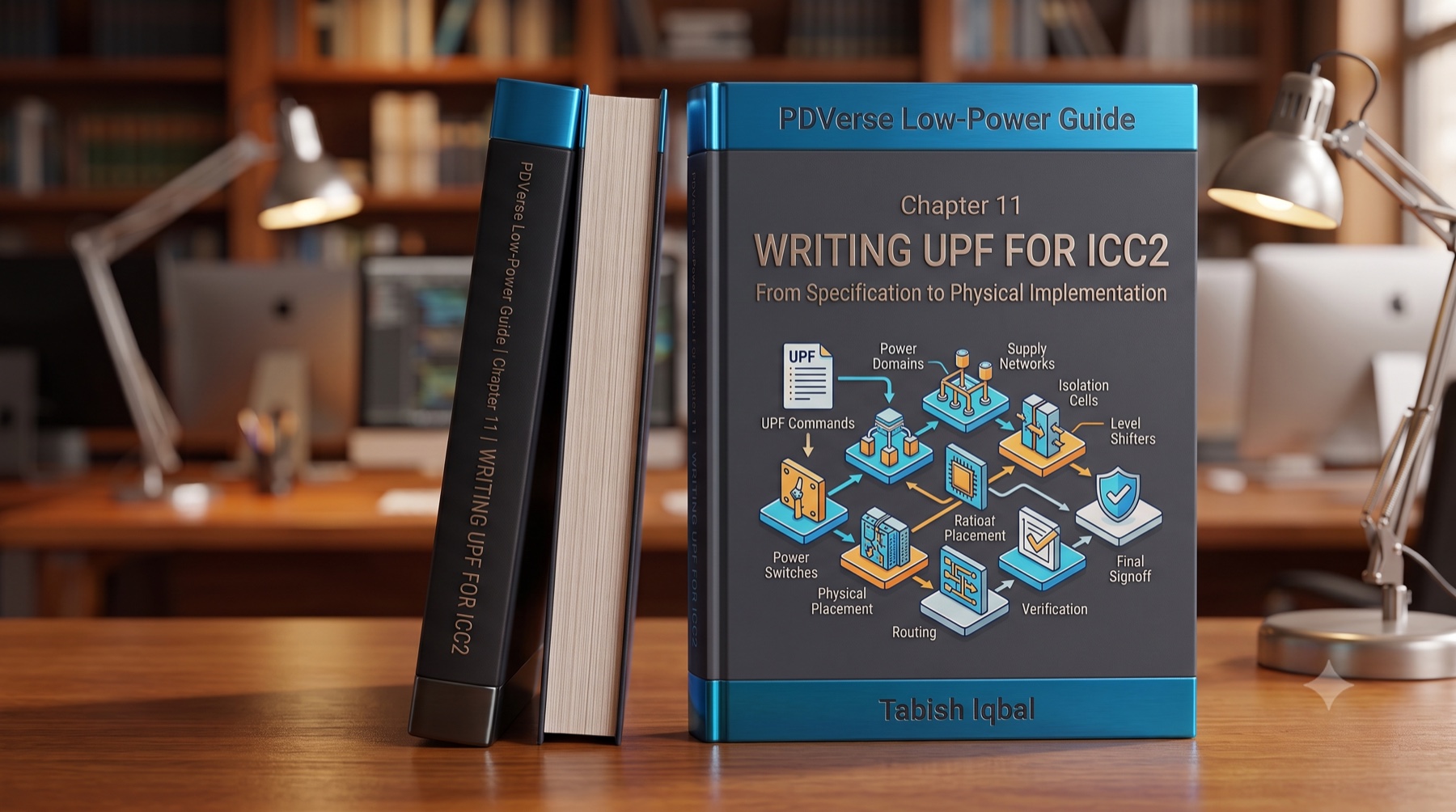
Chapter 11: Writing UPF for ICC2 From Scratch
Chapter 11, 18 pages

Writing UPF for ICC2 From Scratch

Follow a practical ICC2-oriented example from architecture through UPF creation and implementation checks.

  • Create domains and supplies
  • Define low-power strategies
  • Add power states
  • Run ICC2 checks and reports

Deep Signoff Curriculum & Architecture

Mastering Low-Power VLSI, UPF 2.1 & Multivoltage Implementation

In modern FinFET and GAA nodes, power is no longer an afterthought optimized at the final routing stage—it dictates the entire floorplan, clock tree architecture, voltage partitioning, and signoff closure. A single missing isolation cell, an unpowered level-shifter rail, or an illegal power-state combination can result in dead silicon or catastrophic crowbar leakage.

1. Power Fundamentals & Cell Physics

Transistor-level dynamic switching ($P_{dyn} = alpha C V_{dd}^2 f$), internal short-circuit dissipation, and subthreshold/gate leakage physics across multi-threshold ($V_t$) libraries.

2. UPF 1.0/2.0/2.1 Intent Authoring

Writing complete, production-grade IEEE 1801 Unified Power Format code: supply nets, supply ports, supply sets, domain boundaries, power state tables (PST), and logic-to-physical binding.

3. Multivoltage Implementation Rules

Physical voltage area creation, header/footer sleep transistor sizing, virtual rail inrush current budgeting, level shifter placement, and isolation clamp clamp-value selection.

4. State Retention & Low-Power Signoff

Always-on supply routing, balloon latch retention sequencing (save/restore protocols), UPF DRC rule checking, and formal multivoltage equivalence verification.

Who This Low Power Engineering Library Is Built For

Designed for ASIC/SoC Physical Design Engineers, Power Integrity Specialists, Synthesis & STA Signoff leads, and VLSI engineers preparing for senior technical interviews at semiconductor companies (Synopsys, Cadence, Qualcomm, Apple, Intel, NVIDIA, AMD, MediaTek).

Where this fits

Low-power intent (UPF domains, isolation, retention) is authored early and carried through the rest of the flow. See how it lands in Design Planning's power-grid chapters and PnR Flow Mentor Guide's placement and chip-finishing chapters, or get every collection at once in the Complete Library.